
 kinkytiger
The “Four Dragoons”: a BDSM framework in power dynamics
by Joe Rawlins, Thrive Con 2026
While attending a workshop by Venusian Society not long ago (you can read my full blog post here: BOTTOM RESPONSIBILITY), the presenter introduced a framework that was completely new to me.
It was called The Four Dragoons. Not dragons. I was disappointed too. Dragons would have been much cooler. The framework was presented by Joe Rawlins at Thrive Con 2026, and I couldn’t find a huge amount of information about it online, just a few bits and pieces here and there. So, rather than pretending I have uncovered the definitive academic explanation of the Four Dragoons, this is my attempt to explain what I understood from the workshop and why I think the framework is interesting.
Dragoons, not Dragons
The basic idea is to look at what is driving someone towards a particular power dynamic; and where and how those motivations might become problematic. We need to remember that coercion in kink doesn’t always look like someone obviously forcing somebody else to do something. Sometimes the motivations are much more nuanced.
Let's do a deep dive!
First things first: what does “dragoon” mean?
Let’s start with the obvious question. What actually is a dragoon?
Technically, a dragoon (as a noun) is a member of a European military unit formerly composed of heavily armed mounted troops. To dragoon someone (as a verb) means to force them into submission or compliance. Which, when you think about it, is quite an appropriate word for a framework looking at power and control.
So what does it have to do with kink?
The Four Dragoons (aka the Four Dragoons of Dominance and Submission) is a framework for looking at the different motivations that can sit underneath a D/s dynamic.
Rather than simply asking “Who is the Dominant and who is the submissive?”, it focuses on a more interesting question: “Why do these people want this particular power dynamic in the first place?”
And the answer isn’t necessarily the same for everyone.
What are they called?
The framework identifies four different archetypes: Abuse, Social, Scarcity and Relationship. Bear in mind, they aren’t necessarily mutually exclusive and you might recognise yourself (or someone you know) in more than one, or find that your motivations change over time.
And, importantly, these motivations can apply to Dominants, submissives, or both people in a dynamic.
Tiny soldier.
“We need to remember that coercion in kink doesn’t always look like someone obviously forcing somebody else to do something. Sometimes the motivations are much more nuanced.”
Kinky Tiger
So, shall we meet the four?
The Abuse Dragoon
Despite the rather alarming name, the Abuse Dragoon isn’t about being abusive.
Instead, this archetype uses a D/s dynamic as a way of exploring or processing experiences of abuse, trauma or powerlessness. Someone might want to recreate a difficult experience (or part of) within a negotiated, consensual environment in order to reclaim a sense of power or agency.
Yes, this is where my brain immediately went to “kinky version of EMDR”, but I’ve since decided that’s probably not a comparison I should make without a qualified therapist standing next to me (and yet).
So what are the goals and the risks in this framework?
- The goal: Reclaiming power or agency by entering intense situations within a safe, consensual framework.
- The potential risk: The boundaries can become blurred, the intensity can go too far, or someone can end up genuinely re-experiencing trauma rather than processing it.
That last bit is important. Something being consensual doesn’t automatically make it psychologically safe.
The Social Dragoon
Of the four dragoons, this one is about status, identity and recognition. Meaning that the motivation is not just about what happens behind closed doors, but it’s also about how it looks like from the outside.
Think titles and honorifics, community events, social media, public displays of identity, being recognised as a particular type of Dominant or submissive, or simply feeling that you have a place within a particular subculture.
There is absolutely nothing inherently wrong with wanting community, identity or recognition; unless external validation becomes more important than what is actually happening inside the relationship or dynamic…
- The goal: Finding belonging, identity, recognition or status within a community.
- The potential risk: Prioritising how the dynamic looks to other people over what the people involved actually want can lead to burnout, insecurity or disconnection.
Basically: a Fetlife status update is not a substitute for a healthy dynamic.
The Scarcity Dragoon
Rooted in fear of loss, abandonment or not having enough, this one particularly interests me because I suspect many people will recognise at least a little bit of it. Structure, rules and agreements like for example strict scheduling, protocols, resource management, negotiated expectations or even a BDSM contract are used to create a sense of security.
Basically: “If I can make the rules strict enough, maybe I won’t lose this”. Of course, wanting security isn’t inherently unhealthy, and negotiating expectations can be incredibly useful in a dynamic.
Attempting to control another person’s choices will not remove someone’s ability to withdraw consent or leave a relationship.
- The goal: Reducing anxiety and creating a sense of security through structure, predictability and commitment.
- The potential risk: That need for security can become possessiveness, rigidity, micromanagement or increasingly controlling behaviour — potentially creating exactly the instability the person was trying to avoid.
Trying to prevent someone from leaving is, somewhat ironically, a pretty good way of making them want to leave.
The Relationship Dragoon
This archetype sees the D/s dynamic primarily as a mean for intimacy, emotional connection and, sometimes, romantic partnership. But let’s not forget: being in a D/s dynamic and being in a romantic relationship are not the same thing. Sometimes they overlap. Sometimes they don’t.
Of the four dragoons, this one is about how power exchange can be a way of creating deeper vulnerability, trust and connection between the people involved.
- The goal: Using the D/s dynamic to create intimacy, trust, vulnerability and a strong sense of partnership.
- The potential risk: The dynamic can become so central to the relationship that individual identities, boundaries or needs get lost in the effort to maintain the connection.
There is a difference between “I want to be deeply connected to you” and “I don’t know who I am without you.” That difference matters.

Social appearances are not everything

When scarcity becomes a problem

Relationships and dynamics can overlap, but don’t have to
The Four Dragoons shifts the question from “Is this dynamic healthy or unhealthy?” to “What is actually driving this dynamic?”
Both Dom(me)s and submissives enter a dynamic for different reasons. It could be about having a connection, gaining status, craving structure or intimacy, building an identity, or a mix of things. But while none of these reasons are good or bad, it’s still very helpful to understand and recognise them.
Remember the word at the beginning? Coercion. Sometimes the most useful question isn’t “Did they say yes?”, but it’s “Why did they feel they needed to say yes?”
Gonna let that sink in. Food for thoughts and all that.
Anyway, might as well also be worth refreshing your memory on the F-words: Flight, Fight, Freeze and Fawn. That’s another useful lens for thinking about situations where someone’s apparent consent may be driven by fear, obligation or the desire to avoid conflict rather than genuine desire.
Because, ultimately, understanding consent isn’t just about listening to the word yes. Sometimes we need to understand everything sitting behind it.
And that is all for today. Take care and keep it kinky!!
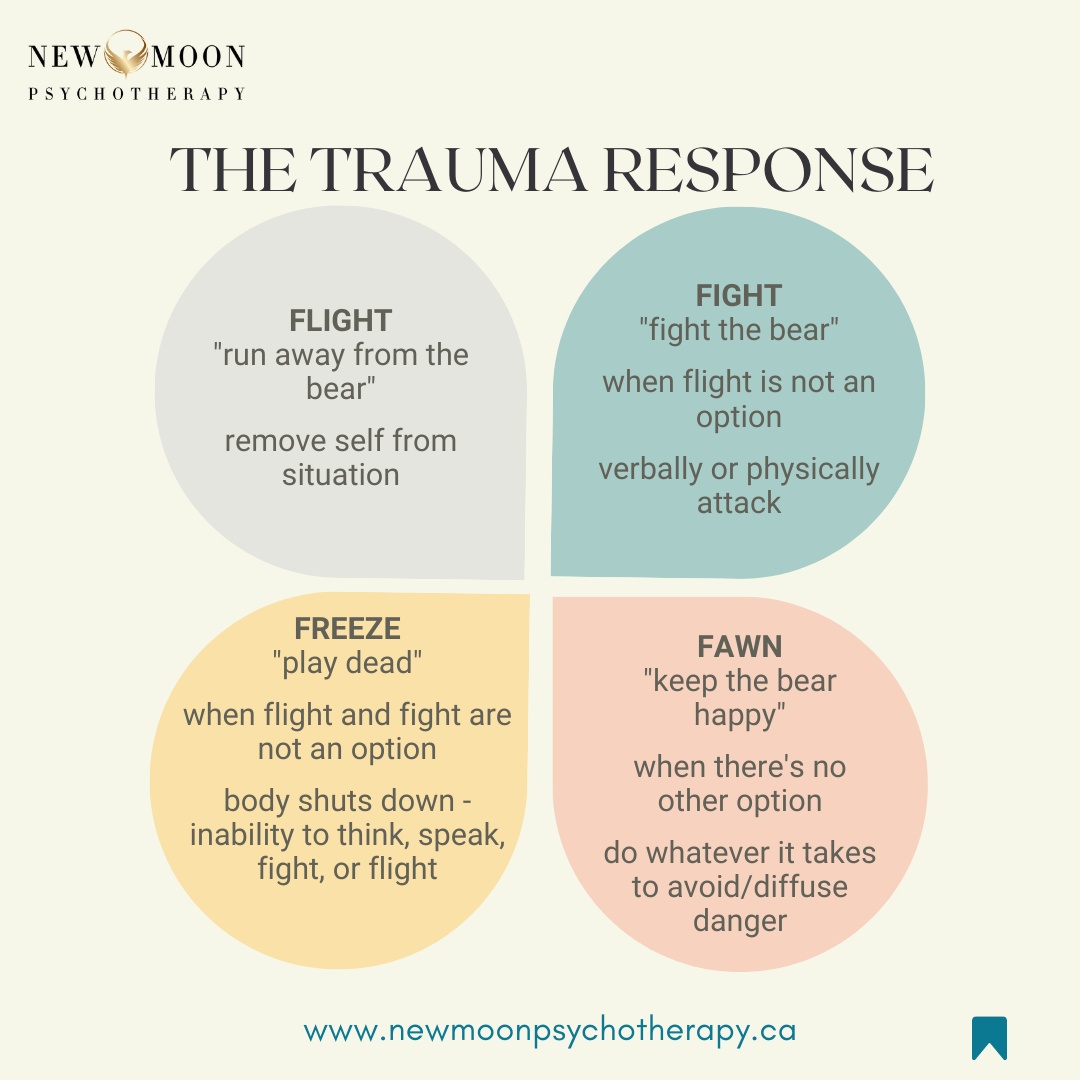
Flight, Fight, Freeze, Fawn
Related posts

Are trigger words political?
Trigger words started off as a trauma tool, but ended up n culture wars. What does that mean? How do you balance care, responsibility, and free speech?
Not an April’s Fools, instead just good news!
Catcalling is now a crime in the UK. A step towards safety, accountability, and recognising the real impact of public harassment on women and girls. YAY!

Unicorns: mythical or misunderstood?
Unicorns in polyamory: let’s explore the dynamics, challenges, and best practices of unicorn relationships/triads and ethical non-monogamy.

Just for fun: What kind of kinky are you?
Shall we take a look at ‘what kind of kinky’ we are? We could put that to the test with 27 questions 🙂 Take this kink test!

Power, play, and history of Female Domination
Why being under Her spell might be exactly where you belong: Exploring the power, play, and history of Female Domination.

Just for fun: Consent is like tea
I am a tea lover. I don’t even drink coffee. So when I saw this, I HAD to write about it. I hope you enjoy it 🙂 take care